
Pressure Equipment & Piping Inspection Services
Independent inspection for pressure vessels, process piping, heat exchangers and fabricated pressure equipment.
Pressure-containing equipment and piping require inspection that reflects the materials, welding processes, fabrication sequence, applicable code and service conditions behind the project.
Dilenza provides qualified inspectors for pressure vessel and process piping projects at manufacturers, fabrication shops, construction sites and other industrial locations worldwide.
Inspector profiles are selected according to the technical scope, applicable standards, equipment type, relevant fabrication experience, location, working schedule and expected assignment duration.
Support can range from one defined inspection point to recurring surveillance, resident inspection and long-term multi-vendor project coverage.
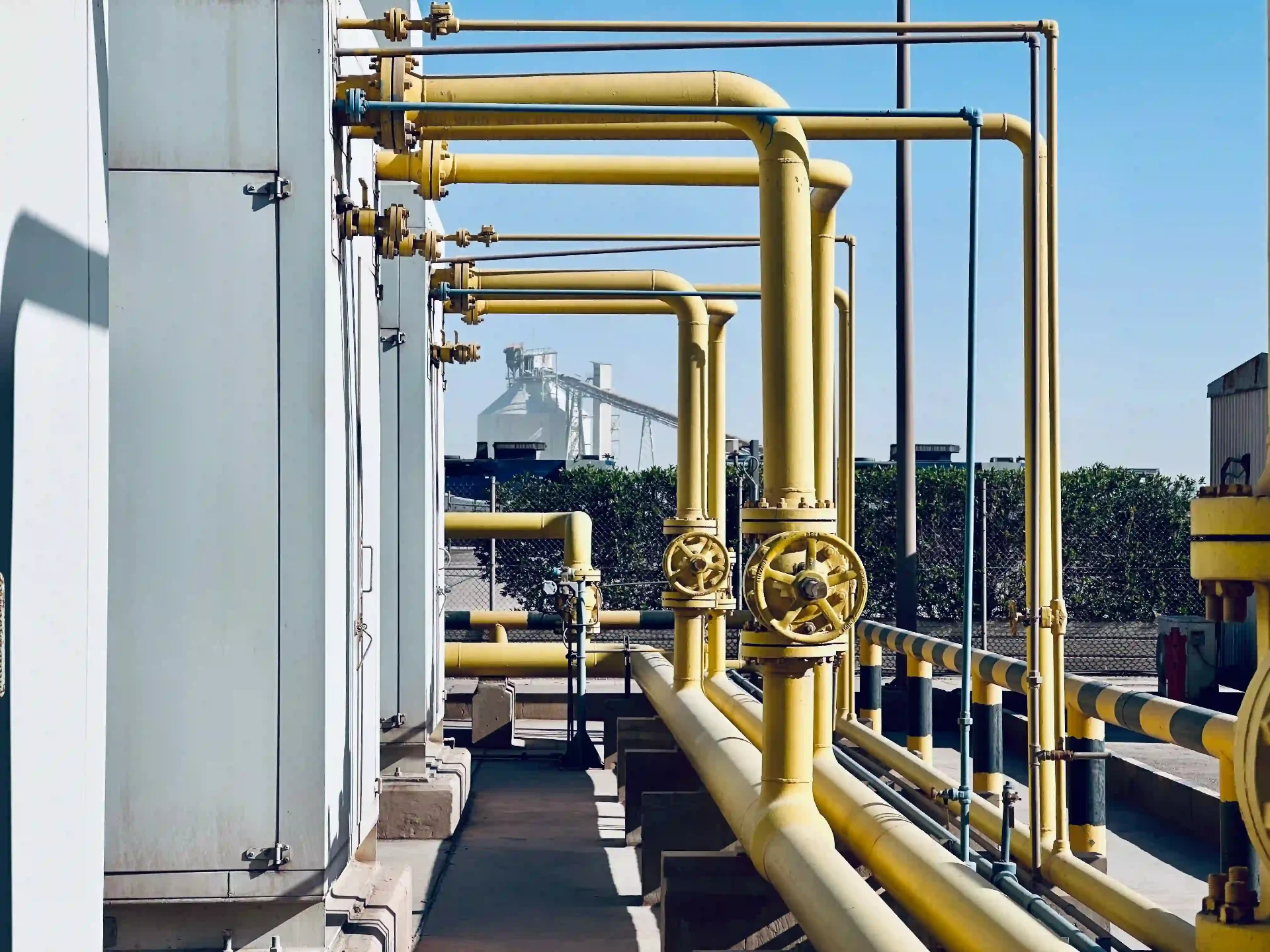
Inspection Where Pressure Integrity Matters
Pressure equipment and process piping operate within technical environments where welding quality, material control, documentation and inspection sequence can have direct implications for the completed equipment.
A pressure vessel manufacturer may require inspection throughout several months of fabrication.
A piping supplier may require attendance only at selected hold and witness points.
An EPC project may involve pressure vessels, heat exchangers and piping packages being manufactured simultaneously by different suppliers in several countries.
The inspection requirement should reflect those differences.
Dilenza considers factors including:
Equipment & materials
- Equipment type
- Materials
- Material grades
- Welding processes
- Joint configurations
- Wall thicknesses
Technical requirements
- Applicable construction codes
- Project specifications
- Inspection and Test Plans
- Welding procedures
- NDT requirements
- Heat-treatment requirements
- Pressure-testing requirements
Inspector & assignment
- Fabrication environment
- Required inspector qualification
- Relevant pressure-equipment experience
- Project location
- Working schedule
- Reporting expectations
- Assignment duration
The qualification matters. Experience with pressure equipment and piping matters too.
Third-Party Pressure Equipment & Piping Inspection
Independent inspection can provide clients, EPC organizations, owners and project quality teams with technical visibility throughout equipment fabrication and piping construction.
Dilenza can provide third-party inspectors to represent agreed client inspection requirements at manufacturers, suppliers, fabrication shops and project sites.
Depending on the assignment, inspection may include:
- Vendor inspection
- Supplier inspection
- Source inspection
- Fabrication surveillance
- Welding surveillance
- Hold-point attendance
- Witness-point attendance
- Documentation review
- Material verification
- Inspection reporting
- Repair follow-up
- Final fabrication review
The inspector operates according to the responsibilities established for the assignment and the applicable controlled project documentation.
Pressure Equipment & Piping We Can Support
Pressure Vessels
Welding inspection during fabrication of pressure vessels manufactured according to applicable project and construction-code requirements.
Process Piping
Inspection of shop-fabricated and field-installed process piping systems throughout fabrication, welding, examination and testing activities.
Heat Exchangers
Inspection support for welded pressure-containing components, shells, channels, nozzles and other applicable fabrication activities.
Boilers & Pressure Components
Welding inspection for project-specific boiler components and associated pressure-containing fabrication.
Piping Spools
Inspection of fabricated piping spools, fittings, branches, flanges and welded assemblies before delivery to site.
Skids & Packaged Equipment
Inspection of process packages incorporating pressure vessels, piping systems and other welded equipment.
Headers & Manifolds
Inspection support for fabricated pressure-containing piping assemblies and related welded components.
Other Pressure Equipment
Project-specific inspection can also be reviewed for other welded pressure-containing equipment and fabricated systems.
Pressure Vessel Inspection
Pressure vessel fabrication can involve a sequence of material, forming, welding, examination, heat-treatment and testing activities that need to remain traceable throughout the manufacturing process.
Depending on the project scope, Dilenza inspectors may support:
- Drawing and fabrication-document review
- Inspection and Test Plan review
- Material certificate review
- Material identification
- Material traceability
- WPS verification
- PQR review
- Welder qualification verification
- Formed-component verification
- Joint preparation inspection
- Fit-up inspection
- Longitudinal seam inspection
- Circumferential seam inspection
- Nozzle fit-up and welding
- Attachment welding
- Welding surveillance
- Preheat and interpass monitoring
- Welding consumable controls
- Visual welding inspection
- NDT witnessing
- Weld repair inspection
- PWHT witnessing or verification where assigned
- Dimensional inspection
- Hydrostatic-test witnessing
- Final documentation review
The exact inspection scope depends on the applicable code, project specification, ITP and responsibilities assigned to the inspector.
Process Piping Inspection
Process piping projects can involve both shop fabrication and field installation, with inspection requirements changing according to piping class, material, service, welding process and project phase.
Inspection may support:
- Piping-material verification
- Material traceability
- Piping spool fabrication
- Fittings and branch connections
- Elbows and reducers
- Flange alignment
- Joint preparation
- Fit-up
- Root-gap verification
- Alignment checks
- WPS verification
- Welder qualification verification
- Welding surveillance
- Preheat and interpass monitoring
- Welding consumable controls
- Visual inspection
- NDT witnessing
- PWHT activities where applicable
- Weld repairs
- Pressure testing
- Final documentation
Inspection can take place at the piping fabricator, equipment manufacturer, modular fabrication yard or final project site.
Inspection Across the Welding Process
Before Welding
Inspection before production begins may include:
- Material certificate review
- Material identification
- Traceability verification
- WPS review
- Procedure qualification review
- Welder qualification verification
- Joint preparation
- Fit-up
- Root gap
- Alignment
- Preheat requirements
- Welding consumables
- ITP requirements
- Acceptance criteria
The objective is to verify that the required conditions are established before welding progresses.
During Welding
As fabrication continues, inspection may include:
- Welding-process verification
- Welding parameters
- Preheat
- Interpass temperature
- Consumable handling
- Joint cleanliness
- Welding sequence
- Workmanship
- Agreed hold points
- Agreed witness points
- Production surveillance
After Welding
Following completion, inspection may include:
- Visual welding inspection
- Dimensional checks
- NDT status
- NDT witnessing
- Repair identification
- Repair follow-up
- Reinspection
- PWHT status
- Pressure-test status
- Weld records
- Documentation review
Material Identification & Traceability
Material control is an important part of pressure-equipment and piping fabrication.
The inspector may be required to verify that the materials incorporated into the equipment correspond with the approved project documentation and remain identifiable through the relevant stages of fabrication.
Depending on the assignment, material-control activities can include:
- Material certificates
- Material Test Certificates
- Material Test Reports
- Heat numbers
- Material markings
- Material grades
- Identification transfer
- Traceability records
- Component identification
- Welding consumable identification
- Project-specific material requirements
Traceability requirements should be established from the applicable project documentation and maintained according to the agreed inspection scope.
Welding Procedures & Welder Qualifications
Pressure equipment and piping fabrication should be performed using welding procedures and personnel qualified according to the applicable project requirements.
Inspection may include verification of:
Welding Procedure Specifications
Confirming that the approved WPS is available and appropriate for the production activity being inspected.
Procedure Qualification Records
Reviewing the relevant PQR where included within the inspector's assignment responsibilities.
Welder Qualifications
Confirming that personnel performing production welding hold the required qualification for the applicable process and range.
Production Welding
Verifying that production welding follows the parameters and requirements established by the approved project documentation.
The applicable qualification requirements must always be determined from the governing code and controlled project documents.
NDT, PWHT & Pressure Testing
Several important fabrication stages occur after or around the welding process itself.
Nondestructive Testing
Depending on the project, examination methods may include:
- Radiographic testing
- Ultrasonic testing
- Magnetic particle testing
- Penetrant testing
- Other project-specified methods
Where assigned, the welding inspector may witness testing activities, review NDT status and follow the disposition of relevant weld repairs.
NDT requiring separately qualified personnel remains the responsibility of appropriately qualified NDT professionals.
Post-Weld Heat Treatment
Where PWHT is required, inspection responsibilities may include witnessing or reviewing:
- Identification of welds or components
- Heat-treatment requirements
- Temperature records
- Heating and cooling parameters
- Documentation
- Final status
The exact responsibility should be established before the activity begins.
Pressure Testing
Where assigned, inspection may include verification or witnessing of:
- Test preparation
- Test pressure
- Test medium
- Instrument status
- Hold period
- Visible leakage
- Test completion
- Documentation
Pressure vessels and piping systems may require hydrostatic, pneumatic or other project-defined pressure testing.
Pressure Equipment & Piping Standards
Pressure vessels and piping may operate under different codes depending on the equipment, service, project location and contractual requirements.
ASME Section VIII
Pressure-vessel projects may be fabricated according to requirements established by ASME Section VIII. Inspection responsibilities should be defined according to the applicable division, edition and project documentation.
ASME Section IX
ASME Section IX may govern qualification requirements for welding procedures and welding personnel used on relevant pressure equipment and piping projects.
ASME B31.3
Process piping projects may operate under ASME B31.3 requirements covering fabrication, assembly, examination, inspection and testing.
ASME B31.1
Power-piping projects may operate under ASME B31.1 where applicable.
Project & Client Requirements
Additional requirements may originate from:
- EPC specifications
- Client specifications
- Project welding specifications
- Inspection and Test Plans
- Approved procedures
- Engineering requirements
- Local regulations
- Other applicable codes and standards
The applicable code, edition, inspector responsibility and acceptance criteria must always be established from the controlled project documentation.
Selecting a Pressure Equipment & Piping Inspector
Certification alone does not establish whether an inspector is suitable for a pressure-equipment project.
Dilenza considers the wider fabrication context when reviewing inspector profiles.
Qualification
Depending on the project requirements, profiles may include:
- AWS Certified Welding Inspector
- CSWIP Welding Inspector
- CSWIP Senior Welding Inspector
- International Welding Inspector
- Relevant NDT qualifications
- Other project-specific credentials
Pressure Equipment Experience
Relevant experience may include:
- Pressure vessels
- Process piping
- Heat exchangers
- Boilers
- Piping spools
- Skids
- Packaged equipment
- Headers
- Manifolds
- Other pressure-containing equipment
Fabrication Activities
Relevant exposure may include:
- Material control
- Fit-up
- Welding surveillance
- NDT
- PWHT
- Pressure testing
- Repair follow-up
- Documentation review
Standards Experience
Inspector familiarity with the applicable ASME or other project requirements can form part of the selection process.
Materials & Welding Processes
Previous experience can be considered against the materials, thicknesses, welding processes and fabrication techniques involved.
Location & Availability
The inspector profile must also fit the location, working schedule and duration of the assignment.
Review the Inspector Before Deployment
Technical suitability can be assessed before the assignment is confirmed.
Dilenza can present relevant pressure equipment and piping inspector profiles for client technical review.
The project team can assess:
- Inspector certification
- Pressure-vessel experience
- Process-piping experience
- Applicable code experience
- Welding-process experience
- Materials experience
- NDT familiarity
- PWHT experience
- Fabrication environment
- Reporting capabilities
- Language
- Location
- Availability
- Assignment duration
Where required, interviews with shortlisted inspectors can be arranged before final selection.
This allows the client to evaluate the proposed professional directly before deployment.
Inspection at Manufacturers & Fabrication Shops
Pressure equipment is frequently manufactured away from the final project site.
A client may therefore need technical inspection at the supplier while fabrication is progressing.
Dilenza can support inspection at manufacturers and fabrication shops through stages such as:
- Material Receipt
- Forming & Preparation
- Fit-Up
- Welding
- NDT
- PWHT
- Dimensional Inspection
- Pressure Testing
- Documentation
- Completion
Inspection presence can be aligned with the ITP and actual production schedule.
This may involve one critical visit, several planned manufacturing milestones or continuous resident inspection.
Vendor Inspection for Pressure Equipment & Piping
Major projects often purchase fabricated equipment from external manufacturers.
Third-party vendor inspection can provide the client with technical visibility while the equipment is still being manufactured.
Depending on the assignment, vendor inspection may include:
- Document review
- ITP surveillance
- Material verification
- Welding inspection
- NDT witnessing
- PWHT witnessing
- Dimensional inspection
- Hydrotest witnessing
- Factory acceptance testing (FAT)
- Repair follow-up
- Punch-list follow-up
- Final documentation
- Production-status reporting
The inspection scope should be aligned with the purchase order, project specification, ITP and agreed inspector responsibilities.
Inspection Coverage Built Around the Fabrication Schedule
Single Inspection Visit
Suitable for a defined hold point, witness point, test or fabrication milestone.
Short-Term Inspection
Inspection support during a concentrated production or fabrication period.
Recurring Inspection
Scheduled visits aligned with manufacturing progress and ITP requirements.
Resident Welding Inspector
Continuous technical presence at the manufacturer where fabrication activities occur regularly over several months.
Rotational Inspection
Inspection coverage for intensive, remote or project-specific working schedules.
Multi-Site Inspection
Inspection resources coordinated across several manufacturers, suppliers or project locations.
The inspection model should follow the fabrication schedule—not the other way around.
Resident Pressure Equipment & Piping Inspectors
Long manufacturing programs can generate substantial project history.
A resident inspector can develop familiarity with:
- Project documentation
- Material traceability
- Approved welding procedures
- Fabrication sequence
- Previous inspections
- NDT status
- Repairs
- PWHT
- Pressure testing
- Recurring technical observations
- Supplier personnel
- Reporting requirements
- Client expectations
That continuity can be particularly valuable when equipment fabrication continues daily over several months or years.
Dilenza can provide resident inspectors for long-term manufacturing and construction assignments, subject to the project requirements and availability of suitable professionals.
Inspection Across Multiple Equipment Suppliers
Large industrial projects may involve several manufacturers producing different equipment packages at the same time.
For example:
- Supplier A
Pressure vessels
- Supplier B
Heat exchangers
- Supplier C
Process piping spools
- Supplier D
Packaged skids
- Supplier E
Other fabricated pressure equipment
Dilenza can structure inspection support across multiple suppliers and locations according to the qualifications, project schedules and technical requirements involved.
This can include separate local inspectors, recurring inspection visits or resident technical presence where required.
Inspection Reporting & Documentation
Physical inspection is only one part of the assignment.
The observations, status and outstanding items must also be communicated clearly to the project team.
Depending on the scope, reporting can include:
- Daily inspection reports
- Inspection visit reports
- Photographs
- ITP status
- Hold-point records
- Witness-point records
- Material status
- Traceability observations
- Welding records
- NDT status
- PWHT status
- Pressure-test records
- Repair follow-up
- Nonconformity documentation where assigned
- Punch lists
- Final summaries
- Resident-inspector timesheets
Before deployment, Dilenza can align with the client on:
- Reporting format
- Reporting frequency
- Distribution
- Project contacts
- Escalation requirements
- Communication channels
- Client reporting systems
How Pressure Equipment Inspection Assignments Are Set Up
- 01
Define the Equipment
Tell us whether the requirement involves a pressure vessel, process piping, heat exchanger, skid or other pressure equipment.
- 02
Define the Technical Scope
Establish the welding activities, inspection points and fabrication stages requiring support.
- 03
Identify Applicable Requirements
Codes, specifications, welding procedures, qualifications and ITP requirements are reviewed.
- 04
Define the Inspector Profile
The required technical experience and qualifications are established.
- 05
Match Relevant Experience
Potential inspectors are considered against the equipment, materials, welding processes and fabrication environment involved.
- 06
Review Location & Availability
The supplier location, working schedule and assignment duration are considered.
- 07
Review Inspector Profiles
Relevant profiles can be presented for client technical assessment.
Interviews with shortlisted inspectors can be arranged where required.
- 08
Prepare & Deploy
Scope, reporting, schedule, contacts and communication requirements are aligned before inspection begins.
- 09
Continue Project Support
For ongoing projects, support can continue as manufacturing schedules, extensions and resource requirements develop.
Industries Using Pressure Equipment & Piping
Oil & Gas
Inspection support for pressure vessels, process piping, skids, heat exchangers and other fabricated equipment used across upstream, midstream and downstream projects.
Petrochemical & Chemical
Third-party welding inspection for process equipment, piping systems, vessels and other pressure-containing components used in petrochemical and chemical facilities.
Power Generation
Inspection for boilers, pressure components, power piping and other fabricated equipment used in conventional and industrial power projects.
Industrial Manufacturing
Flexible welding inspection for manufacturers producing pressure-containing equipment, piping assemblies and packaged systems.
Other Process Industries
Project-specific inspection can also support pressure equipment and piping used across other industrial and process environments.
Frequently Asked Questions
What does a pressure vessel welding inspector check?
The exact scope depends on the project. Inspection may include material traceability, WPS and qualification verification, fit-up, welding surveillance, visual inspection, NDT witnessing, PWHT, repairs, dimensional inspection, pressure testing and final documentation.
Does Dilenza provide third-party pressure vessel inspection?
Yes. Dilenza can provide welding inspectors for third-party inspection requirements at pressure-equipment manufacturers, suppliers and project sites.
Can Dilenza inspect process piping fabrication?
Yes. Inspectors can support process piping during shop fabrication, spool production, field installation, welding, examination and testing according to the agreed project scope.
Can we request an inspector with ASME experience?
Yes. Where particular ASME requirements apply, relevant code and project experience can be considered during inspector selection.
Can inspectors review WPS, PQR and welder qualifications?
Where these activities form part of the agreed inspection scope, inspectors can review or verify relevant welding documentation according to the project requirements.
Can the inspector witness NDT?
Yes, where NDT witnessing forms part of the assigned responsibilities. NDT requiring separately qualified personnel remains the responsibility of appropriately qualified NDT professionals.
Can the inspector witness hydrostatic testing?
Where pressure-test witnessing forms part of the agreed scope, an inspector can attend and report on the test according to the project requirements.
Can we interview the inspector before deployment?
Yes. Relevant profiles can be provided for technical review and interviews with shortlisted inspectors can be arranged where required.
Can Dilenza provide a resident inspector at the manufacturer?
Yes. Resident welding inspectors can support continuous or long-term fabrication programs at equipment manufacturers and fabrication shops.
Can Dilenza inspect equipment at several suppliers?
Yes. Multi-site inspection support can be structured where different project packages are being manufactured simultaneously at several suppliers or locations.
Request a Pressure Equipment & Piping Inspector
Start with the equipment and project requirement.
Tell us what is being manufactured, where fabrication is taking place, which standards apply and what level of inspection presence is required.
Dilenza will review the technical and operational requirements and identify relevant inspector profiles.
Project information can include:
- Project location
- Supplier location
- Equipment type
- Pressure vessel, piping or both
- Applicable code
- Required qualification
- Materials
- Welding processes
- Fabrication stage
- ITP requirements
- Expected start date
- Inspection frequency
- Assignment duration
- Reporting requirements
Review Qualified Inspectors Before You Decide
The right inspector should make sense for the equipment, code, welding processes and fabrication environment—not simply hold an available certification.
Receive relevant inspector profiles for technical review and, where required, interview shortlisted professionals before confirming the assignment.
Pressure Equipment & Piping Inspection Where the Work Takes Place
From one critical fabrication hold point to continuous resident inspection at the manufacturer, Dilenza provides welding inspectors selected around the technical requirements, project location and duration behind the work.
Welding Inspector Qualifications
Where a project specifies a particular welding inspection credential, inspector selection is matched to that requirement.
AWS CWI
AWS CWI Inspectors
Certified Welding Inspectors qualified to AWS QC1 for AWS and ASME-driven fabrication.
View AWS CWI InspectorsCSWIP 3.1
CSWIP 3.1 Welding Inspectors
Welding inspectors widely specified across European, Middle East and Asian projects.
View CSWIP 3.1 Welding InspectorsIWI
International Welding Inspectors
IWI-B, IWI-S and IWI-C profiles for ISO 3834 and EN-driven welding programmes.
View International Welding Inspectors