
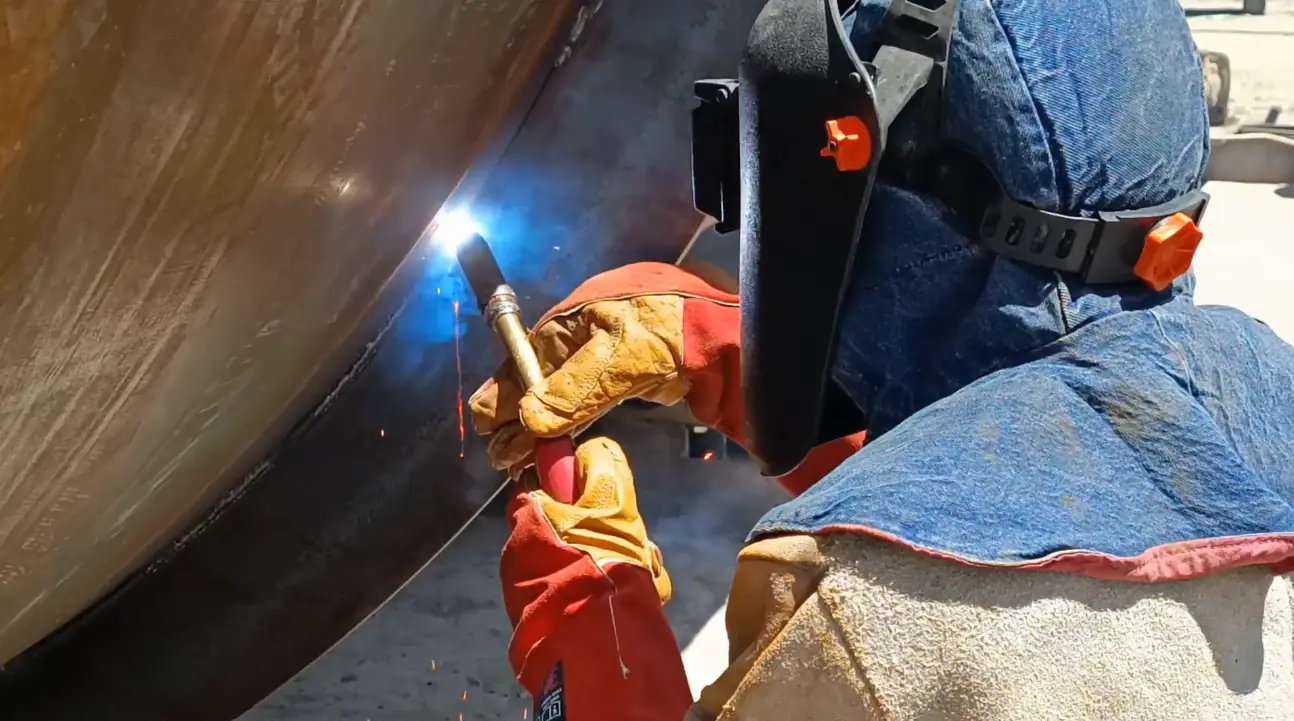
Resident Inspection Services for Long-Term Industrial Projects
Dilenza provides resident inspection services for industrial projects requiring continuous or regular technical presence at a fabrication facility, construction site, shipyard, supplier location or other project site.
Our resident inspectors are selected according to the actual requirements of the assignment, including technical discipline, certification, applicable standards, industry experience, location, language, working schedule and expected project duration.
Assignments can range from several weeks to multiple years and may be structured as full-time, part-time, rotational or project-specific positions.
For welding-related projects, Dilenza can provide qualified welding inspection professionals. For protective coating activities, we can provide experienced coating inspectors. Where both disciplines are required, inspection coverage can be structured around the project sequence and technical responsibilities.
Dedicated on-site presence
Inspection support where the work is performed
Project-specific inspector selection
Qualification · Experience · Standards · Location · Language
Flexible long-term structures
Full-time · Part-time · Rotational · Multi-month · Multi-year
Global project coverage
Europe · Middle East · Asia · Africa · Americas
When Inspection Needs to Become Part of the Project
Some inspection requirements can be managed through individual visits. Others cannot.
When fabrication is continuous, production volumes are significant, activities overlap or a project extends over several months, inspection may need to become part of the day-to-day project structure.
A resident inspector provides that continuity.
Rather than attending only selected milestones, the inspector remains close to the work, develops familiarity with the project requirements and follows activities as they evolve.
This can be particularly valuable when:
- Welding or coating activities occur daily
- Several production stages overlap
- Inspection records must remain consistent
- Technical concerns require follow-up
- Repairs need to be tracked through closure
- Documentation develops progressively
- The project involves multiple shifts
- The client requires continuous site representation
- The assignment continues for several months or years
Dilenza structures resident inspection around the project rather than treating long-term assignments as repeated individual visits.
Long-term inspection is not simply about staying longer. It is about understanding the project better every day.
What Is a Resident Inspector?
A resident inspector is an inspection professional assigned to a defined project location for an extended period.
The inspector may work from:
- A supplier facility
- Fabrication workshop
- Manufacturing plant
- Construction site
- Shipyard
- Offshore fabrication yard
- Maintenance facility
- Project office
- Industrial plant
- Other project-controlled location
Unlike a one-time inspection visit, a resident assignment provides continuity across multiple production stages, inspection points and project developments.
The inspector can become familiar with:
- Approved project documentation
- Inspection and Test Plans
- Project specifications
- Relevant standards
- Supplier personnel
- Production sequence
- Recurring technical concerns
- Reporting expectations
- Open observations
- Repair history
- Project communication channels
The exact responsibilities depend on the technical discipline and agreed scope.
Resident Welding and Coating Inspection
Dilenza's resident inspection model is built around our two specialist technical disciplines.
Resident Welding Inspection
Projects involving continuous fabrication, erection, installation or repair activities may require welding inspection presence throughout production.
A resident welding inspector may support activities such as:
- Welding documentation review
- WPS verification
- Welder qualification checks
- Material traceability
- Joint preparation
- Fit-up inspection
- Welding surveillance
- Parameter monitoring
- Consumable controls
- Visual welding inspection
- NDT witnessing
- Repair follow-up
- Final documentation review
The welding inspector's role is defined by the applicable project requirements and agreed scope.
Resident Coating Inspection
Continuous protective coating programs can also benefit from dedicated on-site inspection.
A resident coating inspector may follow:
- Surface preparation
- Surface cleanliness
- Surface profile
- Environmental conditions
- Coating materials
- Mixing and preparation
- Application activities
- Stripe coating
- Wet-film thickness
- Dry-film thickness
- Holiday testing
- Adhesion testing
- Repairs
- Final coating records
Continuous involvement allows the same inspector to understand the coating history of the asset rather than evaluating isolated stages independently.
Why Projects Use Resident Inspectors
Continuous technical presence
When critical activities occur every day, scheduled inspection visits may leave gaps between inspection points.
A resident inspector can remain available according to the agreed working schedule and follow the work as it progresses.
Better project familiarity
Long-term presence allows the inspector to develop a detailed understanding of the project.
- Project requirements
- Fabrication sequence
- Supplier procedures
- Recurring technical issues
- Documentation practices
- Previous observations
- Repair history
Consistent reporting
Using the same inspector or coordinated resident team can improve consistency in:
- Observation terminology
- Photographic evidence
- Report structure
- Inspection records
- Follow-up
- Communication
Faster follow-up
Where concerns are identified, resident presence can allow the inspector to follow subsequent activities without waiting for another mobilization.
- Repairs
- Re-inspection
- Documentation updates
- Repeat tests
- Punch-list closure
- Production changes
Client representation at the project location
A resident inspector can provide the client with regular technical visibility into activities occurring at a distant supplier or project site.
The inspector does not replace the client's project-management or engineering functions but can provide objective inspection information according to the assigned scope.
Continuity across project phases
Long projects often develop. Production volumes change, schedules move, new equipment enters fabrication, repairs occur and documentation accumulates.
A resident inspection structure can adapt to these changes while retaining project knowledge.
Resident Inspector Assignment Models
Resident coverage can be structured around the workload of the project rather than a fixed staffing template.
Full-Time Resident Inspector
A dedicated inspector attends the project location according to an agreed full-time working schedule.
This model may be suitable when:
- Activities occur daily
- Production volume is high
- Continuous inspection coverage is required
- The project extends over several months
- The inspector needs to follow several parallel activities
One project. One continuous technical history.
When Should You Consider a Resident Inspector?
Resident inspection can be appropriate when one or more of the following conditions apply.
- 01
Project Duration Is Significant
If fabrication or construction will continue for several months, repeated mobilization of short-term inspectors may reduce continuity.
- 02
Production Is Continuous
Where welding or coating activities take place every day, continuous inspection can provide closer alignment with production.
- 03
Inspection Frequency Is High
Resident support may be appropriate when numerous hold points, witness points or inspection activities occur throughout the week.
- 04
The Supplier Is Far From the Client
A resident inspector can provide regular technical visibility where the client's own team cannot remain permanently at the supplier.
- 05
Several Activities Need Follow-Up
Continuous presence can be useful when findings, repairs, testing and documentation must be followed through successive stages.
- 06
Project History Matters
When the same issues, components or fabrication packages need to be tracked over time, inspector continuity can become especially valuable.
- 07
Multiple Shifts Are Operating
Projects with extended production hours may require dedicated or rotational inspection resources.
- 08
The Project Is Strategically Important
For critical equipment or high-value projects, the client may require continuous third-party inspection presence even when individual activities could technically be inspected through periodic visits.
Resident Inspection vs Recurring Inspection
The two models serve different needs.
Resident Inspection
Best suited when:
- Activities occur frequently
- Daily or near-daily presence is needed
- Project continuity is important
- The assignment lasts several months
- Numerous inspection activities overlap
- Follow-up occurs continuously
Recurring Inspection
Best suited when:
- Only certain stages require attendance
- Production is intermittent
- Weekly or milestone-based inspection is sufficient
- Continuous presence would add limited value
Not Sure Which Model Fits?
The correct approach should depend on the project workload, inspection frequency and technical risk—not simply the expected project duration.
How Dilenza Selects a Resident Inspector
Long-term assignments require more than technical certification.
An inspector can be technically qualified and still be unsuitable for a six-month or two-year site assignment.
Resident positions require additional consideration because the inspector becomes part of the project's daily working environment.
Before presenting a profile, Dilenza reviews the assignment across several dimensions.
- 01
Technical Discipline
Does the project require welding inspection, coating inspection, combined expertise or multiple specialist inspectors?
- 02
Required Qualification
The project specification may require qualifications such as:
- Welding: AWS CWI
- CSWIP 3.1
- CSWIP 3.2
- IWI
- Relevant NDT certification
- Coating: AMPP coating inspector qualifications
- FROSIO surface-treatment qualifications
- Other project-specific competence
- 03
Applicable Standards
Relevant experience must match the codes and specifications governing the assignment.
- AWS
- ASME
- API
- ISO
- EN
- AMPP
- Client specifications
- Project-specific standards
- 04
Industry Experience
An inspector experienced in structural steel may not automatically be the right fit for pressure equipment, rail fabrication or offshore structures.
- Oil and gas
- Petrochemical
- Power generation
- Marine
- Offshore
- Shipbuilding
- Structural steel
- Pressure equipment
- Piping
- Pipelines
- Rail
- Renewable energy
- Mining
- Heavy manufacturing
- 05
Project Responsibilities
The exact responsibilities must be understood before the inspector is selected.
- Physical inspection
- Surveillance
- Document review
- ITP activities
- Witnessing
- Reporting
- Meetings
- NCR follow-up
- Punch-list activities
- Release documentation
- Progress reporting
- 06
Location
For long-term positions, location becomes particularly important. The assignment must be operationally sustainable for the expected duration.
- Inspector residence
- Project country
- Travel requirements
- Commuting feasibility
- Accommodation
- Visa status where relevant
- Work-permit requirements
- Local taxation or employment considerations
- Site access
- Medical requirements
- Offshore requirements
- 07
Availability
A resident inspector must be available for the actual project period. A profile suitable for a short assignment may not be suitable for a long-term project if availability is uncertain. Expected assignment duration should therefore be clarified as early as possible.
- 08
Language and Communication
Resident inspectors communicate regularly with several project stakeholders, so language skills and communication ability are important selection criteria.
- Client teams
- Supplier personnel
- Contractors
- Project management
- Engineering
- Quality departments
- NDT providers
- Site management
- 09
Reporting Capability
The required reporting format should be understood before deployment. The inspector may be required to prepare regular:
- Daily reports
- Weekly summaries
- Inspection records
- Photographic reports
- Punch lists
- NCR follow-up
- Timesheets
- Progress updates
- 10
Long-Term Suitability
Technical competence remains essential, but long-term suitability also matters. A resident assignment requires:
- Reliability
- Professional communication
- Consistency
- Independence
- Adaptability
- Ability to work within the project environment
- Commitment to the expected project duration
- 11
Client Review
Relevant profiles can be presented for client assessment before the assignment is confirmed. Where required, the client may conduct:
- CV review
- Certification review
- Technical interview
- Project interview
- Final approval
What Can a Resident Inspector Do?
The exact scope depends on the technical discipline and project requirements.
A resident inspector's responsibilities may include:
- Review of applicable documentation
- Inspection against ITP requirements
- Daily production surveillance
- Welding inspection
- Coating inspection
- Verification of material traceability
- Witnessing specified tests
- Review of inspection records
- Monitoring repair activities
- Follow-up of technical observations
- Punch-list management where assigned
- Progress monitoring
- Photographic reporting
- Coordination with project stakeholders
- Attendance at quality meetings
- Documentation review
- Final inspection support
The scope should be agreed before the assignment begins.
Dilenza does not assume that every resident inspector performs every activity listed above. The responsibilities must correspond to the inspector's qualification and contractual assignment.
Reporting During a Resident Assignment
Technical continuity requires information continuity.
For long-term assignments, reporting can become one of the most important elements of the service. A resident inspector may produce:
Daily Inspection Reports
Records of activities observed, inspections performed, production status and significant technical findings.
Photographic Records
Images linked to the relevant component, activity or observation where appropriate.
ITP Records
Status of applicable inspection stages, hold points and witness points.
Observation Follow-Up
Tracking of issues identified during previous inspections.
Repair Follow-Up
Documentation of repair preparation, execution and re-inspection where included in the scope.
Weekly or Periodic Summaries
Higher-level summaries of project progress, inspection activities and outstanding points.
Timesheets
Confirmation of attendance and working time according to the agreed commercial process.
Final Assignment Summary
Where appropriate, the inspector can provide a final summary at completion or handover.
Before mobilization, Dilenza can align the assignment with the client's:
- Reporting templates
- Naming conventions
- Digital systems
- Submission frequency
- Distribution list
- Escalation requirements
Continuity and Replacement Planning
Long assignments need a continuity plan.
A six-month or multi-year assignment should not depend entirely on one person without considering possible changes.
Project conditions can evolve. An inspector may become unavailable. The client's schedule may be extended. The technical requirement may change.
Where relevant, long-term assignment planning should consider:
- Expected project duration
- Notice requirements
- Backup profiles
- Handover process
- Rotation changes
- Temporary absence
- Replacement needs
- Project extensions
- Scope changes
If a replacement becomes necessary, an effective handover should transfer the information required to maintain continuity:
- Project documentation
- Outstanding observations
- Repair status
- Inspection history
- Reporting requirements
- Key project contacts
- Current production status
Continuity is not simply about keeping a position filled. It is about preserving project knowledge.
Resident Inspectors Across the Project Lifecycle
- 01
Fabrication Phase
Resident inspectors can remain present while equipment or structures are manufactured at the supplier.
- Fabrication workshops
- Pressure-equipment manufacturers
- Structural-steel facilities
- Pipe fabrication shops
- Rail manufacturers
- Wind-tower facilities
- Shipyards
- Equipment manufacturers
- 02
Construction Phase
Inspection may continue at the project site during:
- Installation
- Assembly
- Field welding
- Structural erection
- Piping construction
- Coating activities
- Repair work
- 03
Shutdown and Maintenance
Longer shutdowns or major maintenance programs may also require dedicated inspection resources.
- 04
Commissioning and Close-Out
Depending on the assigned scope, resident inspectors may support final inspection, outstanding-item closure and documentation completion before the assignment ends.
Industries Using Resident Inspection
Oil & Gas
Resident inspectors can follow fabrication and construction activities associated with:
- Pipelines
- Process piping
- Pressure equipment
- Modules
- Skids
- Storage facilities
- Terminals
- Offshore structures
Petrochemical & Chemical
Long-term inspection support for plant expansions, equipment fabrication, piping systems, maintenance and major project programs.
Power Generation
Resident inspection support for equipment fabrication, structural work, piping and power infrastructure.
Renewable Energy
Resident inspectors for:
- Wind structures
- Offshore wind
- Foundations
- Fabricated components
- Renewable-energy equipment
Marine, Offshore & Shipbuilding
Long-term welding and coating inspection in:
- Shipyards
- Offshore fabrication yards
- Vessel construction
- Marine repairs
- Module fabrication
- Offshore structures
Structural Steel & Infrastructure
Resident inspection support for major fabrication and construction programs involving welded and coated steel.
Pressure Equipment & Piping
Continuous inspection for manufacturers producing:
- Pressure vessels
- Boilers
- Heat exchangers
- Process piping
- Tanks
- Packaged equipment
Rail & Transportation
Long-term inspection support for rolling stock, welded railway components and transport-equipment manufacturing.
Mining & Heavy Industry
Resident inspection for fabricated machinery, steel structures and large industrial equipment.
Global Resident Inspector Coverage
Long-term inspection support where your project takes place.
Dilenza supports resident inspection requirements across major industrial regions worldwide.
For long-term assignments, inspector location and mobilization strategy can materially affect project efficiency.
Where possible, Dilenza considers suitably qualified professionals already located near the project or within the same region.
Europe
Resident inspection support across fabrication, rail, energy, marine, infrastructure and manufacturing projects.
Middle East
Long-term welding and coating inspectors for major energy, petrochemical, fabrication, infrastructure and marine projects.
Asia
Resident inspectors for manufacturing, shipbuilding, fabrication, energy and infrastructure projects throughout Asia.
Africa
Long-term project inspection for energy, mining, infrastructure, fabrication and industrial projects.
North America
Resident inspectors supporting industrial manufacturing, fabrication, energy and construction projects in the United States and Canada.
Latin America
Inspection professionals for long-term energy, mining, manufacturing, infrastructure and marine projects.
The Dilenza Resident Inspection Process
- 01
Define the Assignment
Provide:
- Project location
- Technical discipline
- Required qualification
- Applicable standards
- Industry
- Scope
- Working schedule
- Start date
- Expected duration
- Language
- Reporting requirements
- 02
Establish the Resident Profile
Dilenza reviews both technical and operational requirements. For long-term assignments, particular attention is given to:
- Technical experience
- Location
- Availability
- Duration
- Communication
- Long-term suitability
- 03
Identify Suitable Inspectors
Potential profiles are assessed against the project requirement.
- 04
Review Credentials
Relevant certifications and supporting documentation are reviewed according to the stated project requirement.
- 05
Client Profile Review
Suitable inspector profiles can be presented for client approval. Where appropriate, technical interviews can form part of the selection process.
- 06
Confirm Assignment Conditions
Before mobilization, relevant conditions are aligned, including:
- Start date
- Schedule
- Site location
- Reporting
- Project contacts
- Access requirements
- Travel
- Accommodation where applicable
- Timesheets
- Assignment duration
- 07
Mobilize the Inspector
The selected professional begins the assignment according to the agreed project schedule.
- 08
Maintain Project Support
During the assignment, Dilenza can support:
- Communication
- Assignment extensions
- Schedule changes
- Administrative coordination
- Continuity planning
- Replacement requirements
- Additional inspector needs
Why Dilenza for Resident Inspection?
Built around continuity. Long-term inspection requires a different approach from a single visit.
Technical Fit
The inspector is selected for the actual processes, standards and responsibilities involved.
Long-Term Availability
Expected project duration forms part of the selection process.
Client Review
Relevant profiles can be reviewed before assignment confirmation.
Location Consideration
For long-term projects, Dilenza considers the practicality of maintaining the inspector at the required location.
Communication
Language, reporting and stakeholder interaction are assessed as part of the profile.
Project Continuity
The assignment is approached as an ongoing project requirement rather than a succession of unrelated inspection visits.
Flexible Structure
Assignments can be full-time, part-time, rotational, multi-inspector or multi-site.
Welding and Coating Focus
Resident profiles are selected within Dilenza's specialist welding and protective coating disciplines.
Resident Inspection or Short-Term Support?
Not sure whether your project requires a resident inspector?
Choose Resident Inspection When:
- Inspection activities occur several times each week
- Project continuity is important
- Production continues for months
- Follow-up is frequent
- A dedicated client presence is required
Choose Short-Term Inspection When:
- The inspection scope is clearly defined
- Only a limited number of visits are required
- Production duration is short
- Attendance is linked to specific milestones
Choose Recurring Inspection When:
- Regular attendance is required
- Full-time presence is unnecessary
- Visits can be aligned with production milestones
Frequently Asked Questions About Resident Inspectors
What is a resident inspector?
A resident inspector is an inspection professional assigned to a defined project location for an extended period. Unlike an individual inspection visit, the resident inspector provides continuous or regularly scheduled technical presence throughout part or all of the project.
How long can a resident inspector be assigned?
Assignments may last several weeks, several months or multiple years depending on the project requirement and inspector availability.
Can Dilenza provide a resident welding inspector?
Yes. Dilenza can provide qualified welding inspectors for long-term assignments involving fabrication, construction, repair and other welding-related activities.
Can Dilenza provide a resident coating inspector?
Yes. Resident coating inspectors can support surface preparation, coating application, testing, repair and documentation activities for long-term projects.
Can we review the inspector's CV before deployment?
Yes. Relevant profiles can be presented for client assessment before the assignment is confirmed.
Can we interview the inspector?
Where required, a client technical or project interview can form part of the selection process.
Can a resident inspector work according to our reporting format?
Yes, where feasible. Existing client templates, digital systems and reporting expectations should be provided during assignment setup.
Can Dilenza provide rotational resident inspectors?
Yes. Rotational arrangements can be considered for offshore, remote or intensive project environments.
Can more than one resident inspector be provided?
Yes. Projects involving multiple shifts, disciplines, fabrication areas or locations may require several inspectors.
Can resident inspectors cover both welding and coating?
This depends on the inspector's qualifications and project requirements. Where the project requires distinct specialist competence, separate welding and coating inspectors may be more appropriate. Dilenza defines this according to the actual technical scope rather than assuming one inspector should cover both disciplines.
Can Dilenza provide an inspector already based near the project?
Where a suitable professional is available locally or regionally, this can be considered. Selection remains subject to qualification, experience, availability and project suitability.
What happens if the project is extended?
Assignment extensions can be reviewed according to the project's revised schedule and inspector availability. Long-term requirements should be communicated as early as possible to support continuity.
What happens if the resident inspector becomes unavailable?
Where replacement is required, Dilenza can identify an alternative suitable profile. For significant long-term assignments, continuity and handover requirements should be considered as part of project planning.
Can the resident inspector attend project meetings?
Yes, if meeting participation is included in the agreed responsibilities.
Can the inspector issue NCRs?
This depends on the client's project procedure and authority assigned to the inspector. The responsibility should be clearly established before deployment.
Which information should we provide when requesting a resident inspector?
Ideally provide the project location, technical discipline, equipment or structure, industry, required qualification, applicable standards, inspector responsibilities, working schedule, start date, expected assignment duration, language requirements, reporting requirements and site-access requirements.
Request a Resident Inspector
Build the inspection requirement around the project
Tell us where the inspector needs to be based, what activities need to be followed and how long the project is expected to continue.
Dilenza will review the requirement and identify the profile best suited to the assignment.
Diligence that stays with the project.
Resident welding and coating inspectors for the projects where continuity, technical understanding and on-site presence matter most.