Petrochemical & Chemical Inspection Services
Dilenza provides qualified welding, coating and vendor inspectors for petrochemical and chemical projects, covering process equipment fabrication, pressure equipment, process piping, storage assets and plant construction work.
Inspection can be arranged at equipment manufacturers, fabrication workshops, construction sites and operating facilities, for a single visit, a recurring programme, a shutdown window or a resident assignment.
Equipment and assets inspected
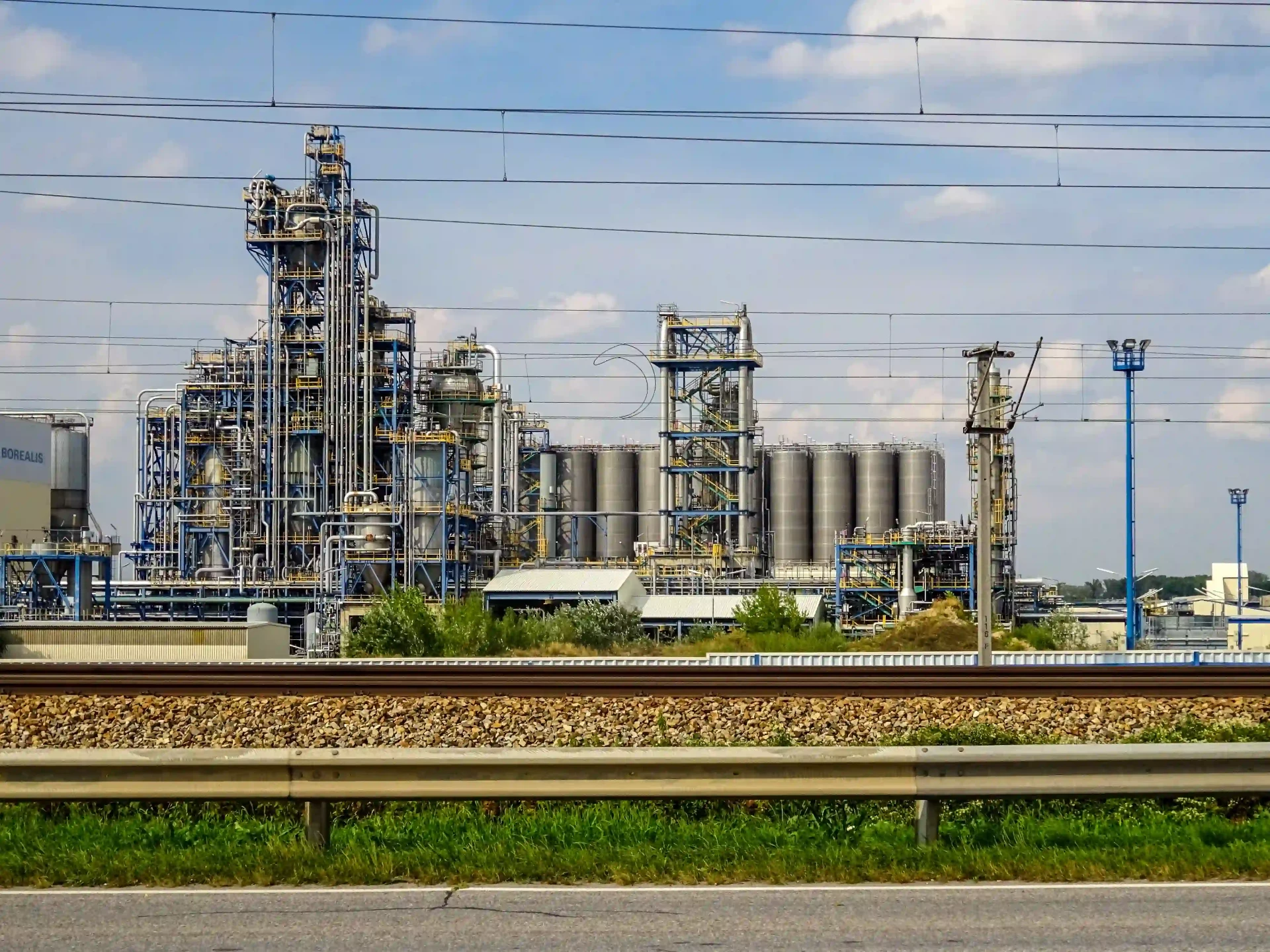
Petrochemical and chemical projects combine pressure-containing equipment, corrosive service conditions and demanding documentation requirements.
Process equipment
Reactors, columns, towers, drums, separators, filters, agitated vessels and packaged units supplied to petrochemical and chemical facilities.
Pressure vessels
Welded pressure-containing equipment fabricated to ASME VIII, EN 13445 or client design codes, including clad, lined and alloy construction.
Process piping
Carbon steel, stainless steel, duplex and nickel-alloy piping spools, tie-ins, utility lines and modular piping racks.
Heat exchangers
Shell and tube exchangers, tube bundles, air coolers, condensers and reboilers, including tube-to-tubesheet welding and retubing work.
Storage equipment
Atmospheric tanks, chemical storage vessels, bullets, spheres, sumps and secondary containment fabricated for corrosive or hazardous service.
Structural fabrication
Pipe racks, platforms, equipment supports, skids and modular steelwork fabricated for plant areas and expansion projects.
Welding inspection in petrochemical fabrication
Typical activities across process equipment, piping and structural fabrication.
- Review of specifications, inspection and test plans, drawings and applicable process requirements
- WPS, PQR and welder qualification verification, including alloy and clad material requirements
- Material identification, traceability and positive material identification coordination
- Fit-up, joint preparation, preheat, interpass temperature and welding parameter monitoring
- Visual inspection of root, fill and cap passes and of completed welds
- NDT witnessing and review: RT, UT, PT, MT, hardness testing and PMI results
- Post-weld heat treatment chart review and verification of the applied cycle
- Pressure testing witness, punch-list follow-up and final documentation review
Protective coating and lining inspection
Chemical exposure, immersion service and insulated equipment place specific demands on surface preparation and coating control.
- Surface preparation, cleanliness and profile verification before application
- Ambient conditions, dew point and substrate temperature monitoring during application
- Coating material verification, batch records, mixing and pot-life control
- Wet and dry film thickness measurement, holiday detection and adhesion testing
- Insulation-related corrosion protection systems for equipment operating under insulation
- Chemical-resistant linings, tank internals and immersion-service coating verification
- Repair procedures, touch-up control and final coating acceptance records
How inspection is organised
Assignments are structured around the phase of the project and the location of the work.
Vendor inspection during procurement
Surveillance at fabricators and equipment suppliers around defined hold points, witness points, factory acceptance testing and final release for engineered process equipment.
Shutdowns and turnarounds
Inspection support during limited execution windows covering repair welding, exchanger work, piping replacement, vessel internals and coating campaigns.
Plant expansion and revamp projects
Coverage across several fabricators and construction contractors while new units, tie-ins and utilities are fabricated and installed.
Resident inspection assignments
Continuous presence at a fabrication facility or plant site where inspection activity is sustained over a longer period.
Common questions
- What does petrochemical inspection cover beyond welding?
- Assignments commonly combine welding inspection with material verification, dimensional checks, NDT coordination, PWHT review, pressure testing, coating inspection and documentation review, depending on the equipment and the inspection and test plan.
- Can inspectors cover alloy and clad equipment?
- Yes. Inspector selection is based on the project requirements, including the applicable code, base and weld metal combinations, welding processes, qualification level and relevant fabrication experience with the materials involved.
- Do you support inspection at suppliers rather than at the plant?
- Yes. Vendor inspection can be structured around project-defined hold points, witness points, FAT activities and final verification for engineered equipment and industrial procurement.
- Which qualifications are typically requested?
- AWS CWI, CSWIP 3.1 and International Welding Inspector qualifications for welding work, and AMPP or FROSIO qualifications for protective coating and lining work.
Tell Us About the Inspection
You do not need to prepare a long enquiry. Provide what you already know — supplier location, equipment, inspection scope, qualification and dates.
Have an ITP, specification, drawing, purchase order or inspection scope? Upload it with your request.
Single Visit · Recurring · Resident · Rotational · Multi-Site